

Continuing Education For Pilates Instructors
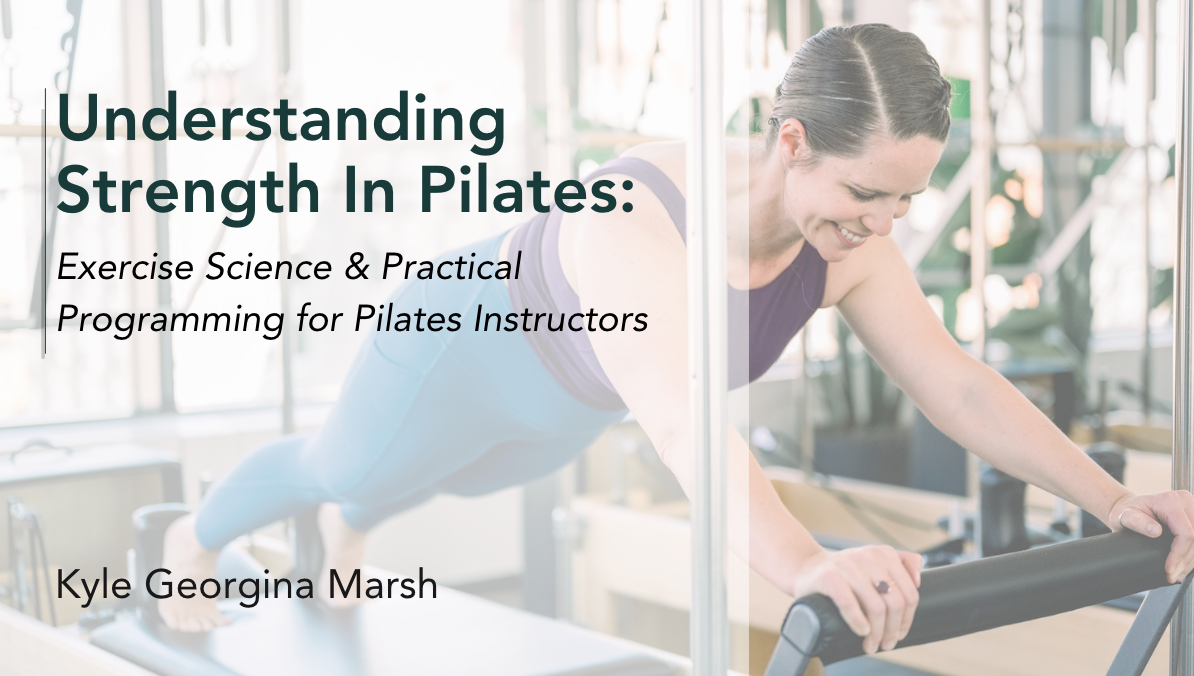
A self-paced course designed to help Pilates instructors better understand strength, adaptation, progressive overload, and how to apply these concepts in the studio.
4 Modules · 14 lessons · Self-paced · Lifetime access + all future course updates
BONUS: Invitation to the inaugural live Zoom workshop + workshop recording
Have your ever caught yourself wondering…
What's the difference between getting stronger and simply getting better at an exercise? Does adding spring resistance always automatically make something progressive overload? What does it look like to actually bias strength in a Pilates session? Doesn’t following “the system” automatically mean I am already making clients stronger? And how do variables like load, range of motion, stability, tempo, and fatigue actually influence adaptation?
If you've found yourself asking questions like these (be it out loud or to yourself), this course was built for you.
Three Course Promises
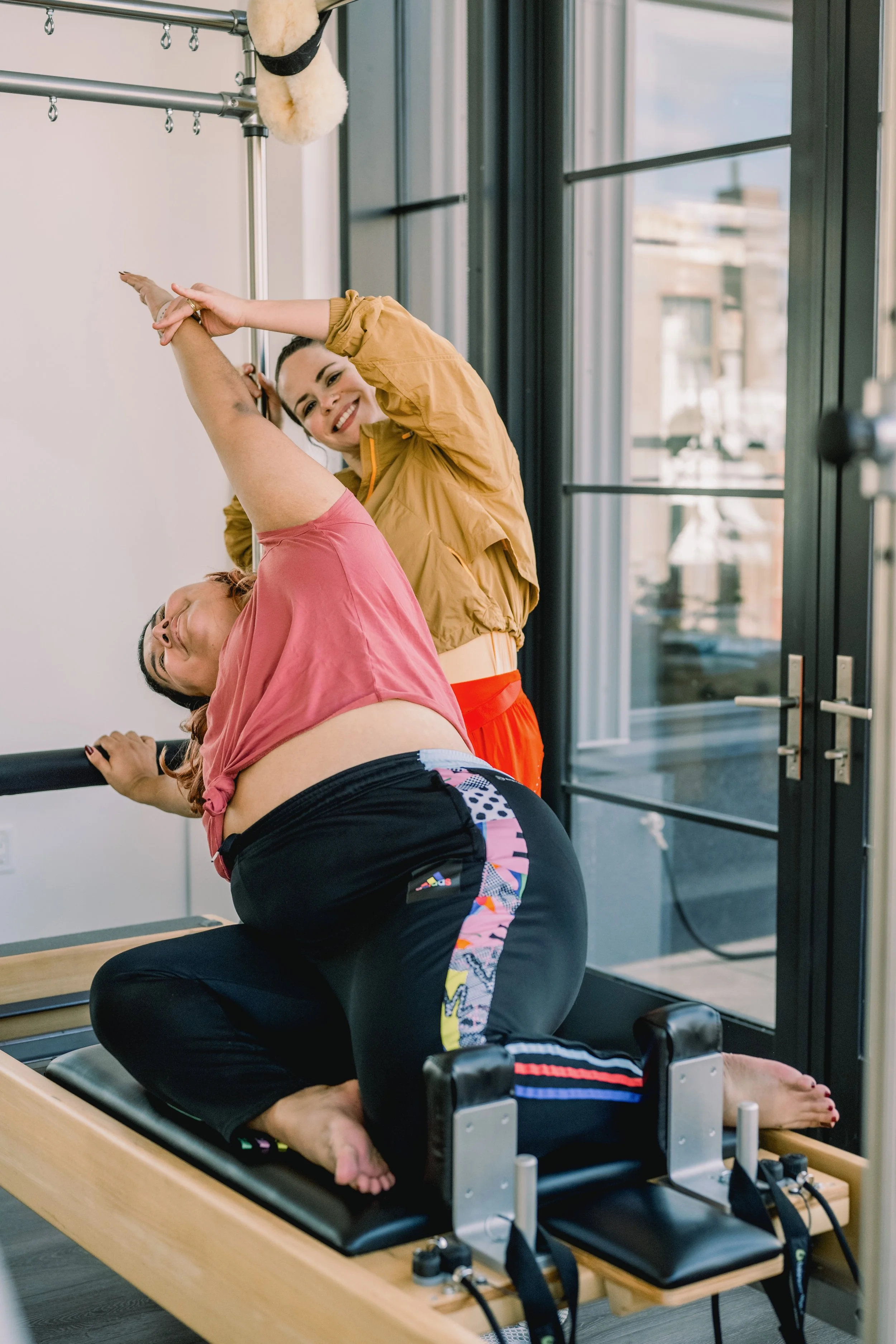
01 BUILD CONFIDENCEUnderstand the “why” behind your programming.
Develop a clearer understanding of strength, adaptation, and progressive overload so you can confidently identify what an exercise is actually training—and explain the reasoning behind your programming choices.
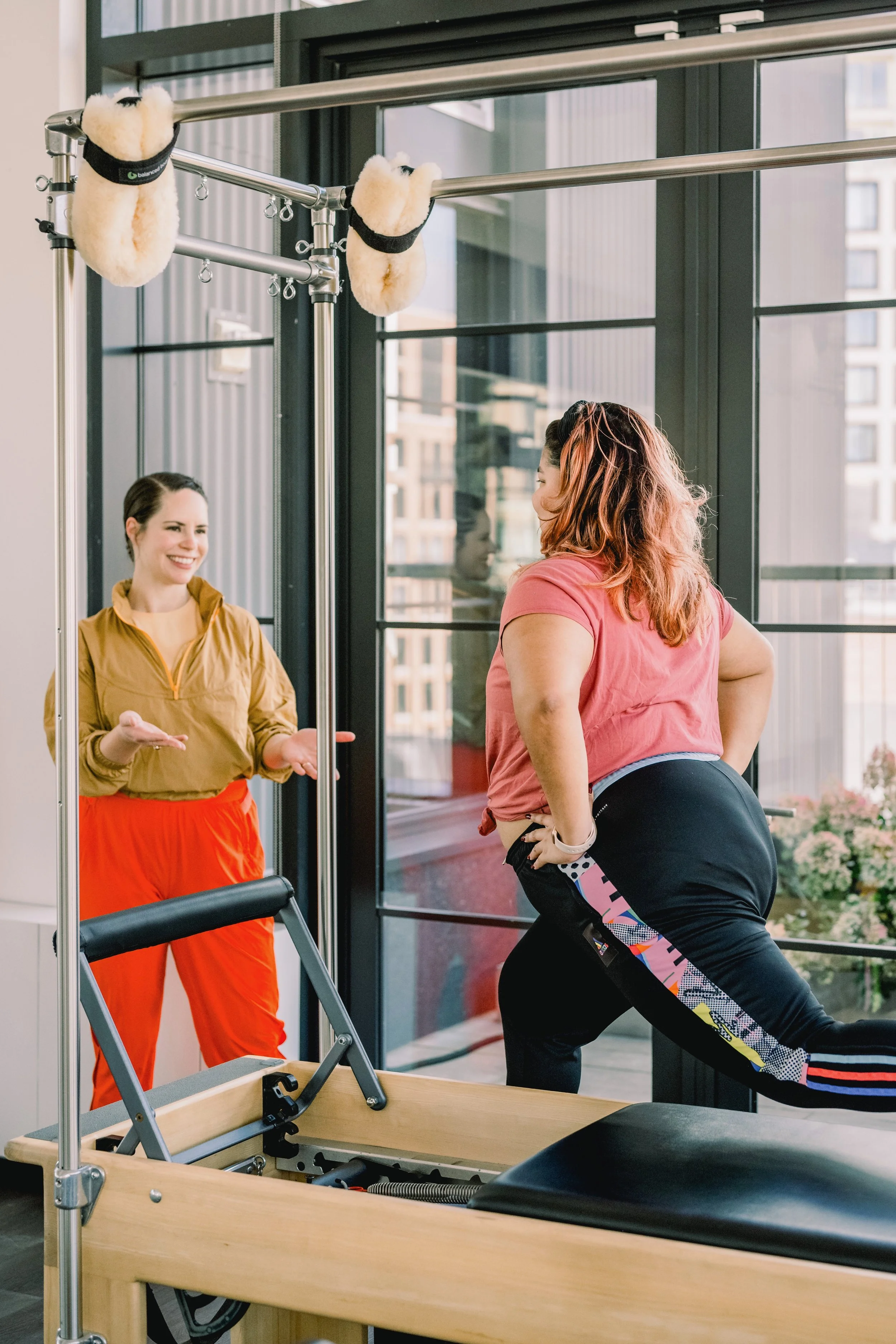
02 LEARN NEW APPROCHESLook at familiar Pilates repertoire through a new lens.
Learn to distinguish between making an exercise harder and biasing a strength stimulus. Explore how load, stability, range of motion, complexity, effort, rest, and exercise order can be manipulated depending on the adaptation you’re trying to create.
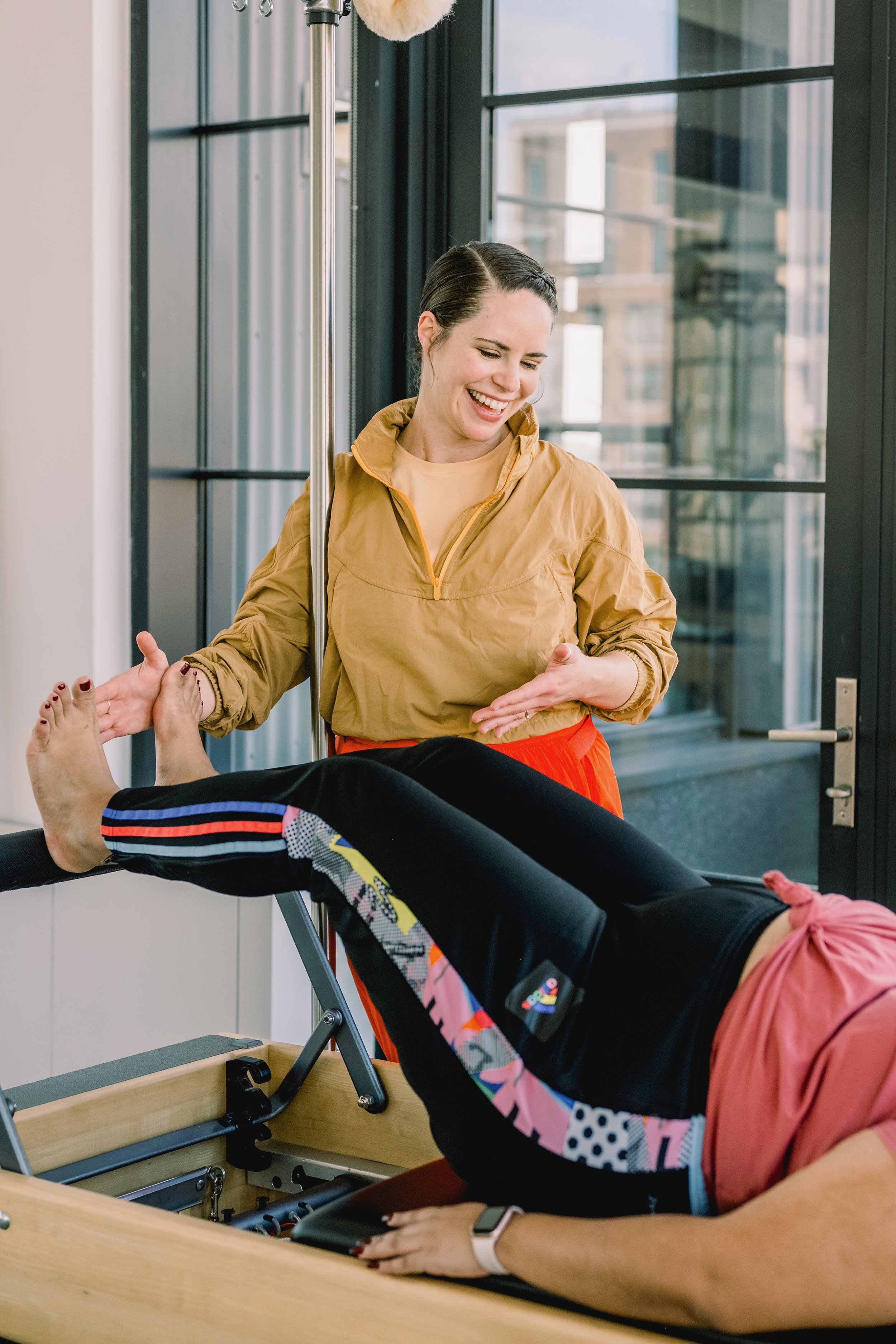
03 GAIN PRACTICAL TOOLSTurn exercise science into programming you can actually use.
Apply simple frameworks for evaluating exercises, progressing clients, selecting resistance, and building Pilates sessions that intentionally bias strength—without completely abandoning the Pilates repertoire you already know and love.
The Curriculum
What’s inside the course?
MODULE 1: What is Strength?
Explore what we actually mean by “strength” and begin distinguishing between strength, muscular endurance, hypertrophy, and skill acquisition. Discuss basic physically activity guidelines and how they may inform your clients physical goals.
-
Introduction & Welcome
Workshop Goals
Mindsets & Framing
Reflection Activity
-
Definition of strength
Maximum strength (1RM concept)
Strength as force production (+ vectors)
Strength as a measurable quality
What do clients actually mean when they say they want to be “stronger” and how should we interpret that.
The difference between:
Strength vs Endurance
Strength vs Control
Strength vs Skill Acquisition
Strength vs Hypertrophy
-
ACSM Physical Activity Guidelines
Resistance training recommendations
Public health statistics
Physical activity and it’s relationship to all cause mortality
Why strength training matters across the lifespan
MODULE 2: How Do Muscles Create Force?
-
Types of Muscle:
Smooth muscle
Cardiac muscle
Skeletal muscle
-
Motor units & muscle activation:
Motor neurons
Muscle fibers
Innervation
Motor units
All-or-Nothing Principle
What do clients actually mean when they say they want to be “stronger” and how should we interpret that.
The difference between:
Strength vs Endurance
Strength vs Control
Strength vs Skill Acquisition
Strength vs Hypertrophy
-
Internal vs. external force:
Internal force
External force
How movement is created
Why force relationships matter
Movement is the interaction between internal and external forces.
-
Types of muscle contractions:
Isometric
Concentric
Eccentric
Force relationships
Pilates examples
-
Why understanding contraction types matters when programing exercises.
Identify programming variables that influence muscular demand.
Time under tension
Tempo manipulation
Eccentric loading
Strength stimulus
Recognize that the way an exercise is performed can be just as important as the exercise itself
Build a practical understanding of skeletal muscle, motor units, internal and external forces, muscle contractions, and the nervous system's role in developing strength.
MODULE 3: How Do We Create Adaptation?
-
Teaching Framework:
“The three dimensions or exercise”
Load
Range of Motion
Control
Clarifying the relationship between strength, load, & force demand
-
Physical adaptation
Specificity
SAID Principle
Relationship between training stimulus and adaptation
Different demands create different adaptations
-
What progressive overload means
Why training demands need to progress as the body adapts
The relationship between stimulus, adaptation, and progression
Different ways we can progress training demands
Why progressive overload doesn't just mean adding more weight
How specificity and progressive overload work together
Why harder doesn't always mean better
-
Warm-up & movement preparation
Exercise selection & order
Load & repetitions
Effort & proximity to failure
Rest & recovery
Stability & force production
Volume & frequency
Exercise selection through movement patterns (push, pull, squat, hinge, trunk)
-
PUTTING THE PIECES TOGETHER:
How programming variables interact
Why “hard” can mean different things
How different combinations bias different adaptations
Straight sets
Supersets
Drop sets
Active recovery
How to analyze a program based on its desired outcome
Explore the SAID principle, programming variables, Pilates progressions, progressive overload—and where these concepts sometimes overlap and where they don't.
MODULE 4: Applying These Concepts In Pilates
-
Distinguish between a Pilates progression and progressive overload—and recognize where they overlap.
Identify when making an exercise “harder” changes complexity, coordination or stability rather than strength demand.
Recognize where Pilates already provides opportunities for strength development and where it may bias other adaptations.
Apply strength-training variables—including load, effort, sets, rest, stability, volume, and exercise order—within a Pilates environment.
Use Push, Pull, Squat, and Hinge as a simple framework for evaluating exercise selection.
Make intentional programming decisions based on the desired adaptation.
Build and modify Pilates sessions to more intentionally support strength development.“The three dimensions or exercise”
Load
Range of Motion
Control
Clarifying the relationship between strength, load, & force demand
Bring everything together using familiar Pilates exercises and a practical framework for evaluating load, range of motion, and control so that you can tailor your session intentionally and specifically.
The True II Form Approach
“Better teaching starts with being brave enough to ask the occasionally uncomfortable questions.”
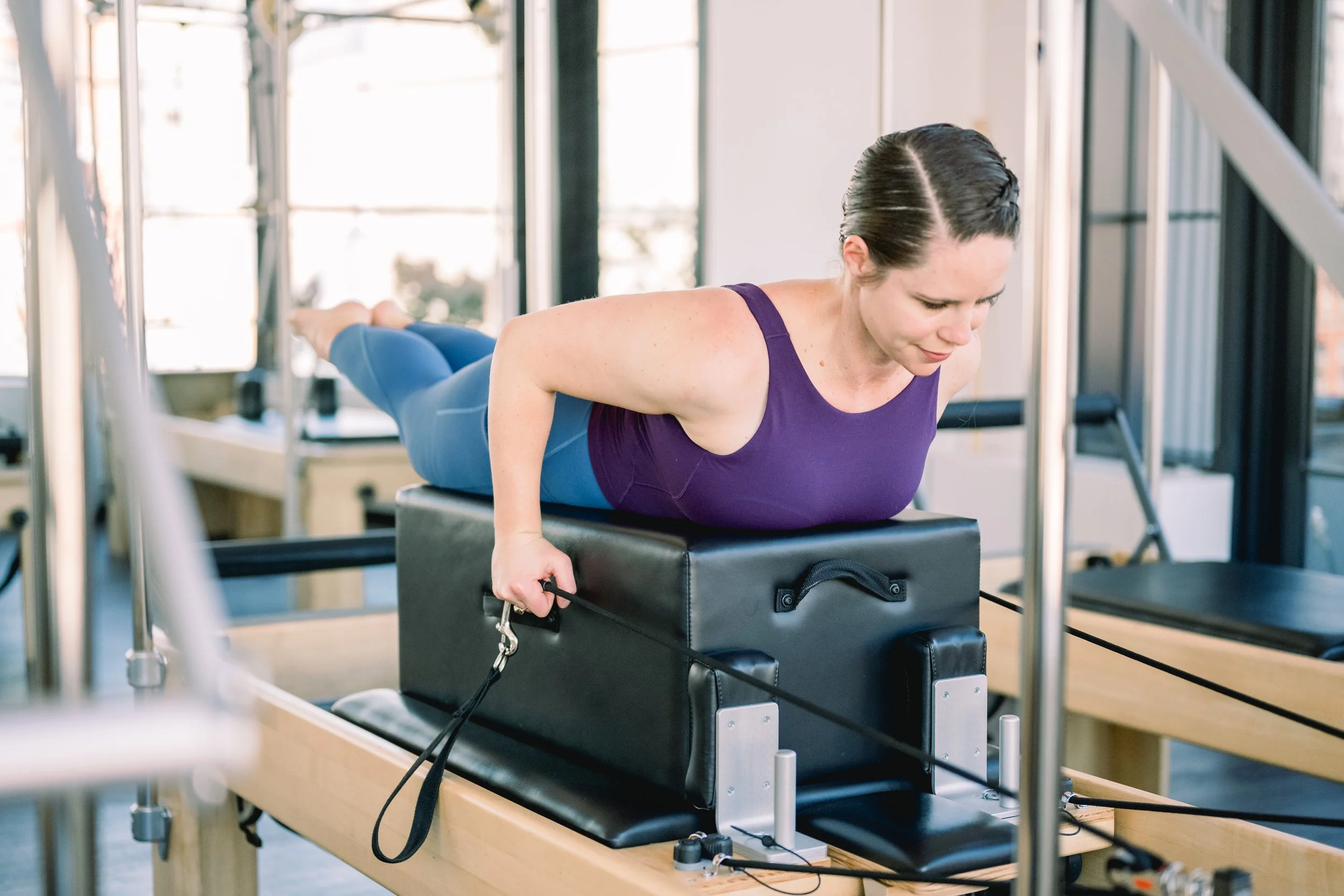
This course isn’t about replacing Pilates with strength training. It’s about expanding the lens you use to understand the repertoire you already teach—and giving you more tools to work with when biasing strength is the goal.
Meet Your Educator

Hi, I'm Kyle.
I've been teaching Pilates since 2012, with a professional background spanning dance, dance education, Pilates teacher training, anatomy, and strength training.
True II Form grew out of my own experience questioning some of the things I'd once accepted as fact—and discovering that learning more doesn't always require us to throw the baby out with the bathwater. Sometimes, it simply means being willing to question what we know, update our understanding, and keep growing.
By the End of This Course, You'll Be Able To...
Get clear on what you're training for.
Distinguish between strength, endurance, hypertrophy, range of motion, and motor skill—and program with the desired outcome in mind.
Understand how we produce force.
Explain how muscles, the nervous system, and internal and external forces work together to create movement.
Look beyond “harder.”
Use the Three Dials—Load, Range of Motion, and Control Teaching Framework—to identify what actually changes when an exercise progresses.
Program with greater intention.
Apply adaptation, specificity, and progressive overload by manipulating training variables based on your client's goals and capacity.
Bring it back to Pilates.
Distinguish Pilates progressions from progressive overload and identify practical opportunities to develop strength within Pilates.
Learn at your own pace. Join me live. Come back whenever you need a refresher.
Your Questions, Answered-
This course was created for Pilates instructors who want a deeper, more practical understanding of strength, exercise science, and how these concepts relate to the work they're already doing with clients.
-
No. We'll start with foundational concepts and build from there. The course is specifically designed to make foundational exercise science approachable and relevant for Pilates instructors.
-
Lifetime. Your enrollment also includes any future updates or additions to this course at no additional cost.Lifetime. Your enrollment also includes any future updates or additions to this course at no additional cost.
-
No problem. The self-paced course stands on its own, and your enrollment also includes access to the live workshop recording.